How to Source Fabric for a Clothing Brand in India
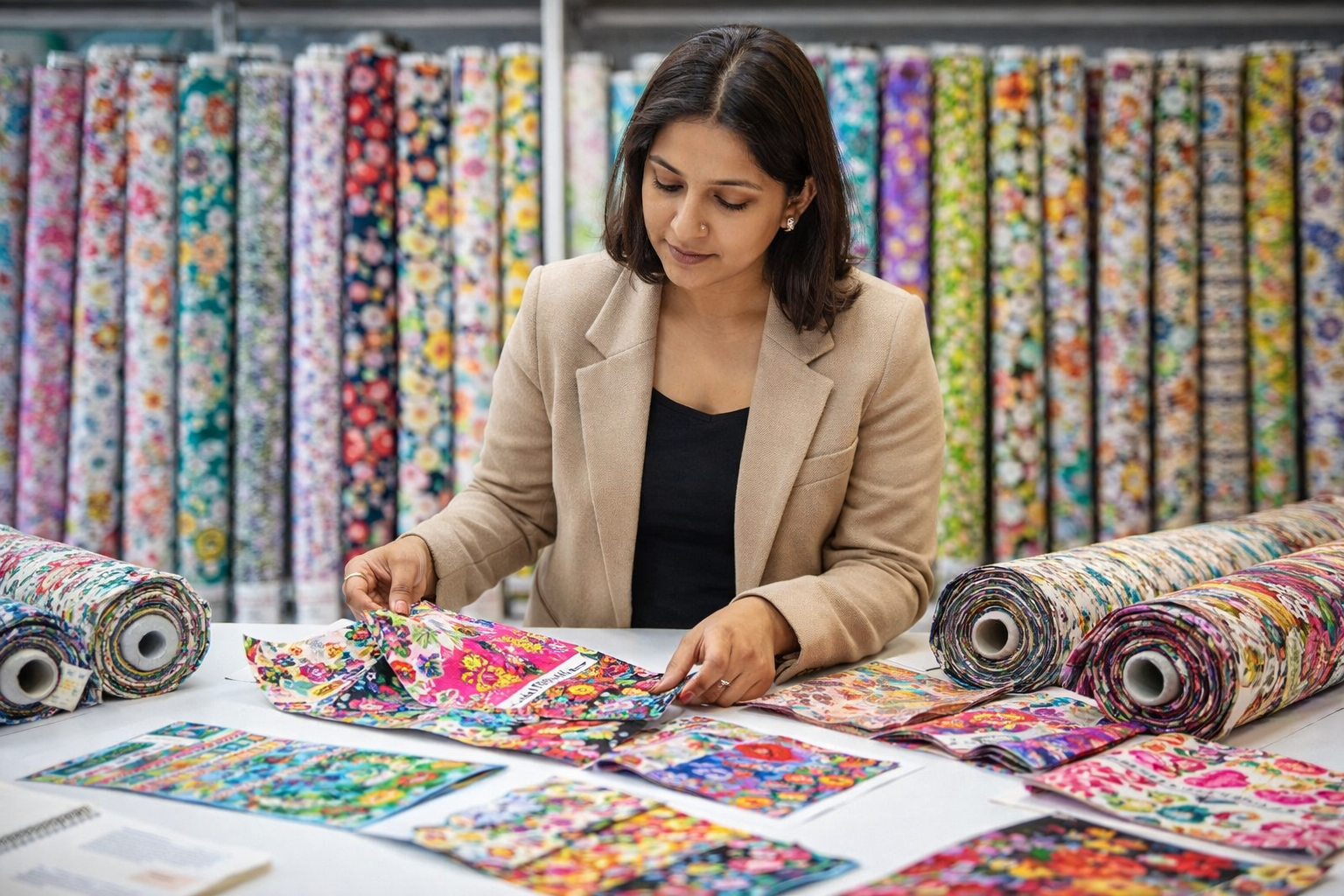
Sourcing fabric for a clothing brand in India involves choosing the right fabric type, identifying reliable wholesale suppliers, understanding MOQ requirements, and planning inventory smartly. Most Indian fashion brands source either from wholesale fabric suppliers, textile markets like Delhi and Surat, or directly from digital printing manufacturers depending on their scale and budget.
This guide explains how clothing brands in India typically source fabrics, what to check before placing bulk orders, and how to reduce sourcing risk.
1. Understand Your Fabric Requirements First
Before contacting any fabric supplier, define:
Garment type (kurtis, dresses, co-ord sets, shirts, resortwear)
Fabric base (cotton, viscose/rayon, polyester blends, linen)
GSM range
Print type (digital print, screen print, solid dye)
Target cost per meter
For example:
Summer dresses often use breathable cotton or rayon between 60–120 GSM.
Structured garments may require higher GSM cotton or blended fabrics.
Clarity at this stage prevents overbuying and reduces supplier confusion.
2. Where Do Clothing Brands Source Fabric in India?
There are three main sourcing channels.
A. Wholesale Fabric Suppliers
Many brands work with structured wholesale suppliers who:
Maintain large ready-stock design libraries
Offer moderate MOQs (often 100 meters per design)
Allow repeat orders
Provide faster dispatch timelines
For example, some Delhi-based wholesale suppliers specialize in digital printed cotton and rayon fabrics for garment manufacturers and small fashion brands.
This model works well for:
Startups
Testing new collections
Brands wanting variety without large inventory risk
B. Textile Markets (Delhi, Surat, etc.)
Popular markets include:
Gandhi Nagar (Delhi)
Surat textile market
Other regional wholesale hubs
Markets provide:
Wide variety
Immediate availability
Competitive pricing
However, quality consistency and repeat stock may vary.
C. Direct Manufacturers & Custom Printing Units
Brands wanting exclusive prints often work directly with:
Digital printed fabric manufacturers
Custom fabric printing units
Custom production typically involves:
Artwork submission (AI file or repeat design)
Sampling approval
MOQ commitment
Production timeline (usually 10–20 working days)
This works best for:
Established brands
Signature design collections
Large production volumes
3. Ready Stock vs Custom Printing: Which Is Better?
Ready Stock Fabric
Advantages:
Lower development risk
Faster dispatch (often within 3–10 days)
Lower MOQ per design
Easier for small brands
Limitations:
Non-exclusive designs
Dependent on stock availability
Custom Printed Fabric
Advantages:
Exclusive designs
Brand differentiation
Controlled print scale
Limitations:
Sampling time
Longer production cycle
Higher commitment
Many growing clothing brands in India use a hybrid model:
Ready stock for fast launches
Custom printing for key collections
4. What Is the Typical MOQ for Fabric in India?
MOQ varies depending on supplier type:
Ready stock digital prints: often 100–300 meters per design
Custom digital printing: usually 100–500 meters
Screen printing: can require higher minimums
Always confirm:
Per design MOQ
Per color MOQ
Repeat availability
Restocking timelines
Suppliers offering 100 meters per design are often preferred by small and mid-size brands because it reduces inventory risk.
5. How to Evaluate a Fabric Supplier
Before placing bulk orders, check:
Fabric Quality
Feel and drape
GSM consistency
Shrinkage after wash
Color fastness
Print Quality
Design sharpness
Color accuracy
Bleeding or fading risk
Business Reliability
Clear communication
Transparent pricing
Defined dispatch timelines
Export documentation (if needed)
Request samples whenever possible before committing to bulk quantities.
6. Understanding Pricing Structure
Fabric pricing in India depends on:
Fabric base (cotton, rayon, blends)
Printing technique (digital vs screen)
Order quantity
Design complexity
Dispatch model (ready stock vs production)
Lower price does not always mean better long-term value. Reliable repeat supply and consistent quality often matter more than small price differences.
7. Inventory Planning for New Fashion Brands
New brands often make two mistakes:
Ordering too much of one design
Ordering too many designs without market testing
A balanced approach:
Start with moderate quantities per design (100–300 meters)
Test sell-through rates
Work with suppliers who allow repeat orders
Maintain variety without overstocking
This reduces dead stock risk.
8. Sustainable Fabric Sourcing in India
For brands focused on sustainability, consider:
Organic cotton
Low-impact dyes
Responsible production practices
Certification (if required for export markets)
Sustainable sourcing may involve higher cost but strengthens brand positioning in premium segments.
Frequently Asked Questions (FAQs)
-
Most small brands start with wholesale suppliers offering ready stock digital printed fabrics with moderate MOQs. This reduces development time and capital risk.
-
Cotton and rayon are widely used because they are breathable, affordable, and suitable for dresses, kurtis, and co-ord sets.
-
Many new brands start with 100–300 meters per design to test demand before scaling.
-
Both are major textile hubs. Delhi markets are strong for ready stock digital prints, while Surat is known for large-scale textile manufacturing.
❤️🧵 Looking for trendy, high-quality printed fabrics for your next collection?
We work with 800+ fashion businesses globally. Explore our curated wholesale fabric range designed for clothing brands like yours. Contact us on WhatsApp to view our catalogue!